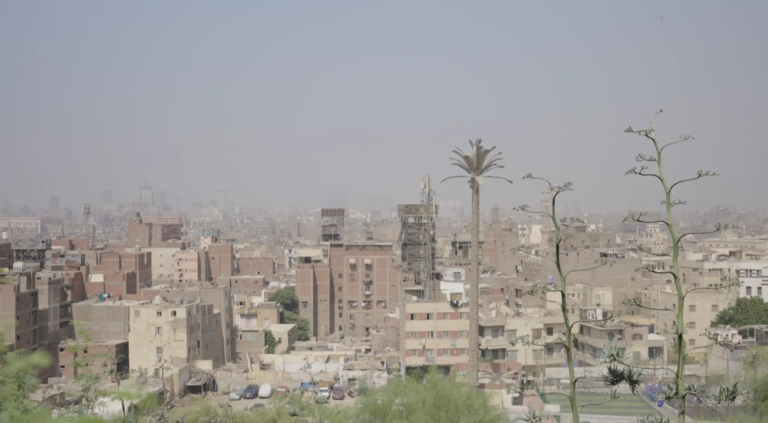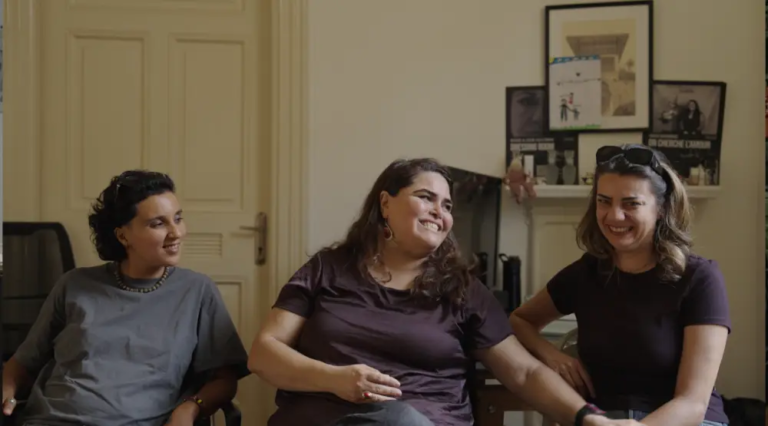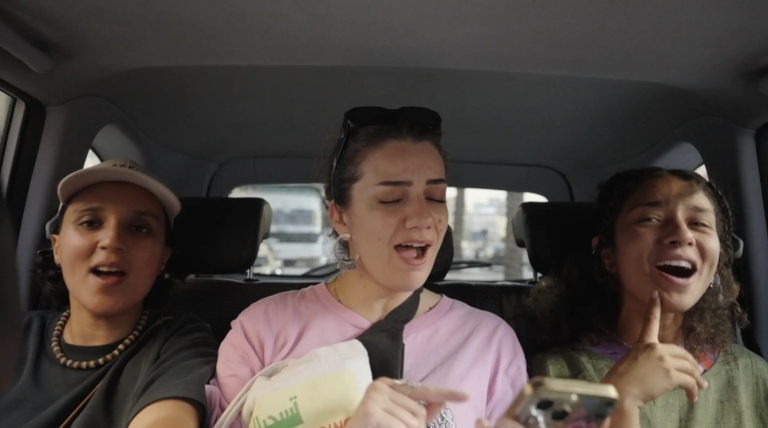
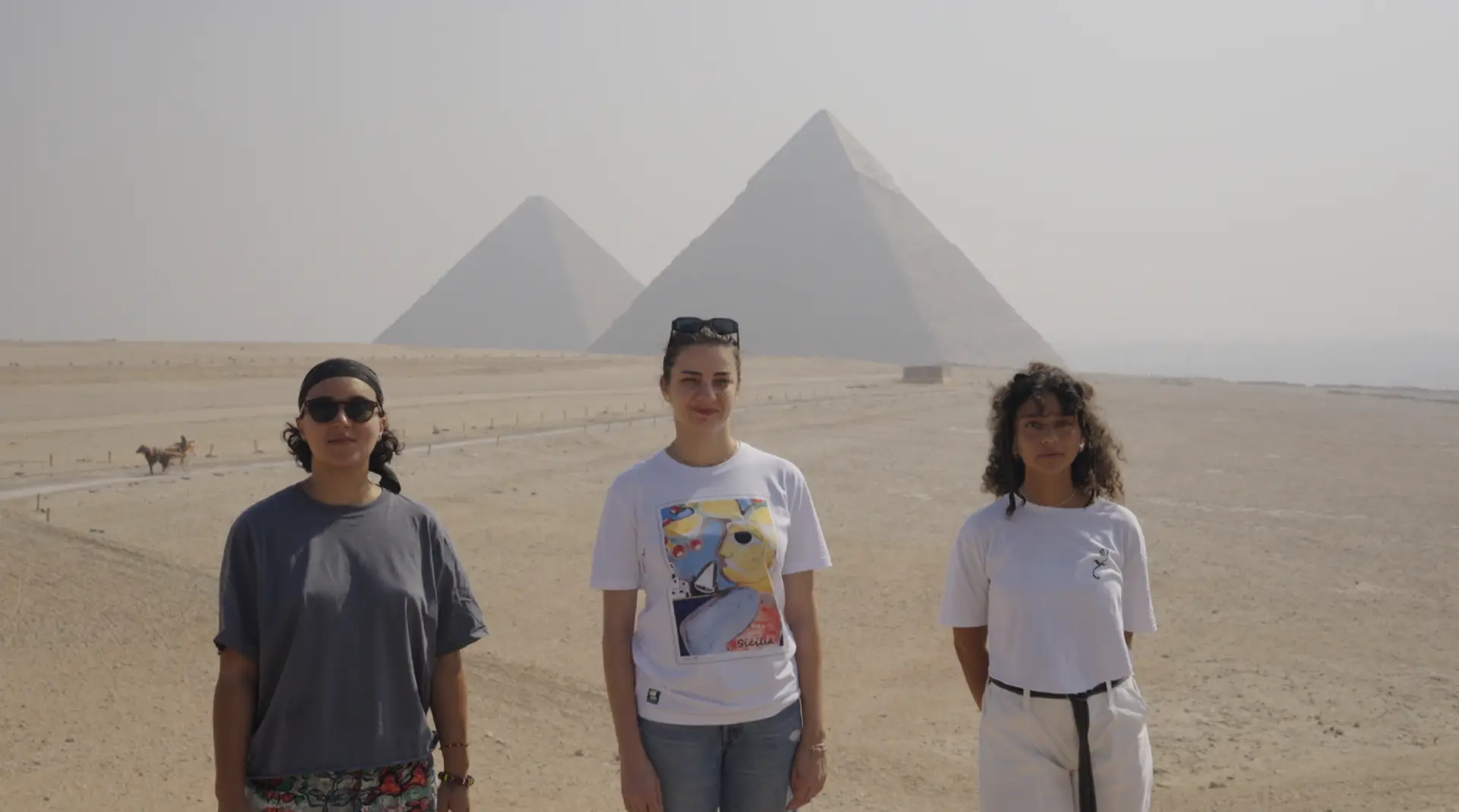
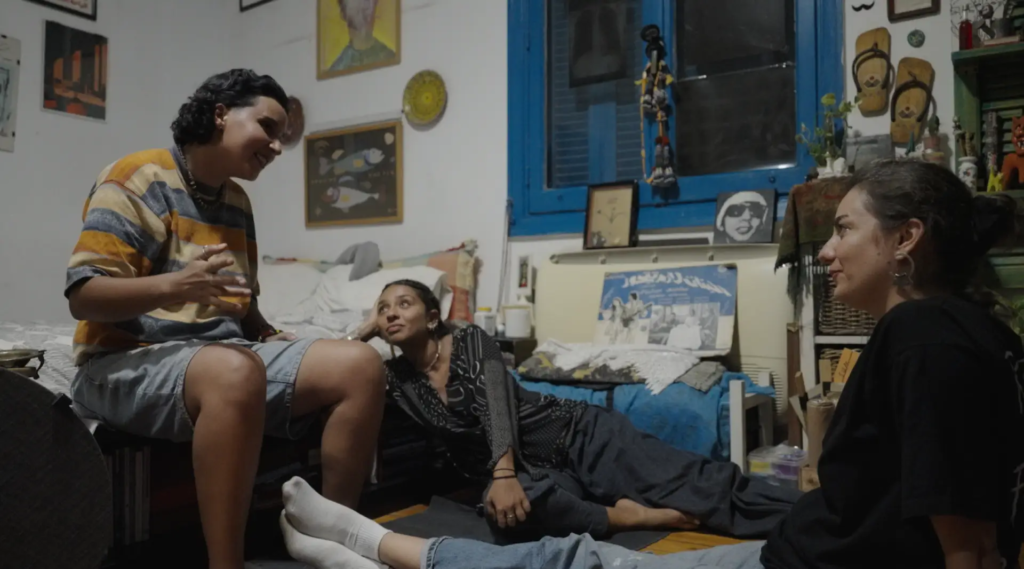
This chapter centers on a trip to Cairo, Egypt, and the encounters we filmed there.
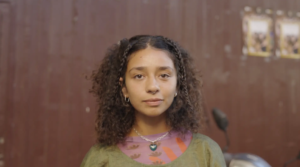
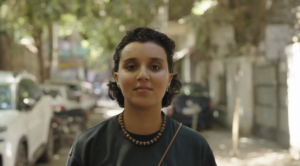
On stage, Asmaa Samlali from Morocco, Hala Rajab from Syria, and Amina Onsy from Egypt discuss the revolutions that took place in their respective countries—collective uprisings, but also deeply personal ones.
How do we find our freedom and break free from the models imposed on us? There are indelible, irreversible uprisings that shape us. Each woman reflects on her journey toward freedom, her connection to her country of birth, and the identities that define them.
In the beginning
We met Asmaa Samlali 10 years ago for a live radio show in Casablanca.
At the time, she was studying film, writing poetry, and speaking Darija. A year later, she left for France and was granted asylum. Her activism in the LGBTQ+ community had put her in danger in Morocco. So her first flight was to leave Morocco in 2017. Her second flight was in September 2026, when she joined us on our trip to Cairo. We wanted to travel with Asmaa, who participated in the February 20, 2011 youth movement in Morocco when she was a teenager, to explore the question of collective and personal uprisings: even if they do not succeed within societies, what makes them irreversible?
We’re also traveling with Hala Rajab, a Syrian woman who has been part of the project for seven years. We haven’t yet been able to return to Syria together—she’s been in France for 10 years. But we’re going to Egypt, where her father, an opponent of the Syrian regime, was in exile for two years. It’s her first time in Cairo.
Asmaa and Hala's meeting with Amina
Together, we meet Amina Onsy, who grew up in Cairo and still lives there. Her family took part in the Revolution in Tahrir Square while she, at age 12, was watching her cousins at home. Her mother, uncle, and aunt would tell the children about their days and their hopes—hopes that have since been betrayed.
Following her mother’s death when she was 14, she quickly gained her independence and began working, becoming part of Cairo’s music and art scene. Her journey is one of self-empowerment: how can one be true to oneself without lying and without having to break away from one’s family or social circle? “It’s a dance”, Amina likes to say. To navigate through different circles, classes, and neighborhoods. To earn respect everywhere.
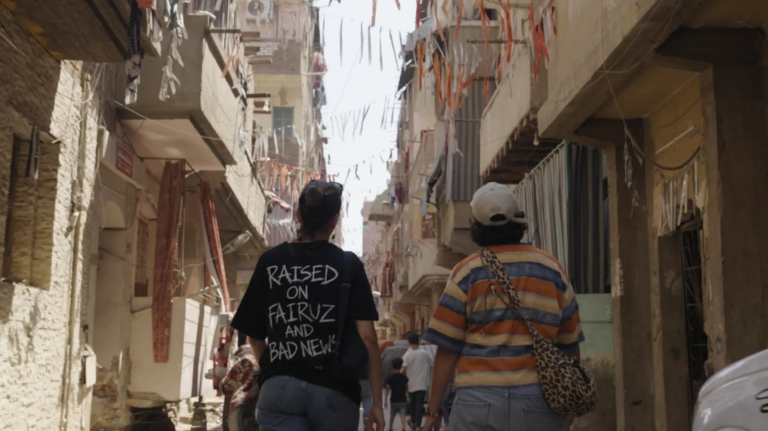
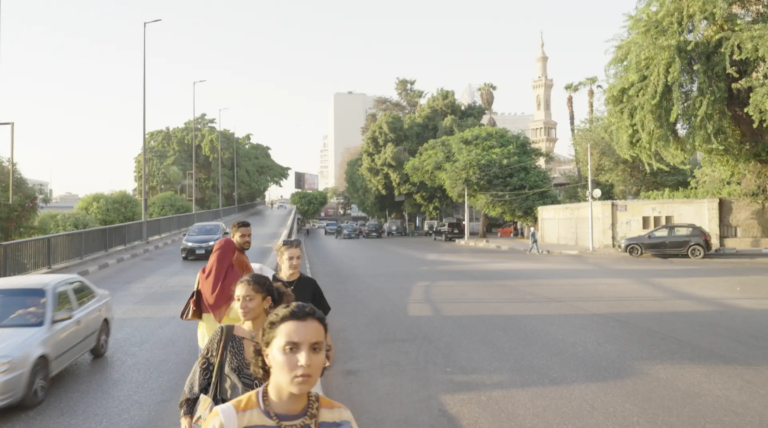
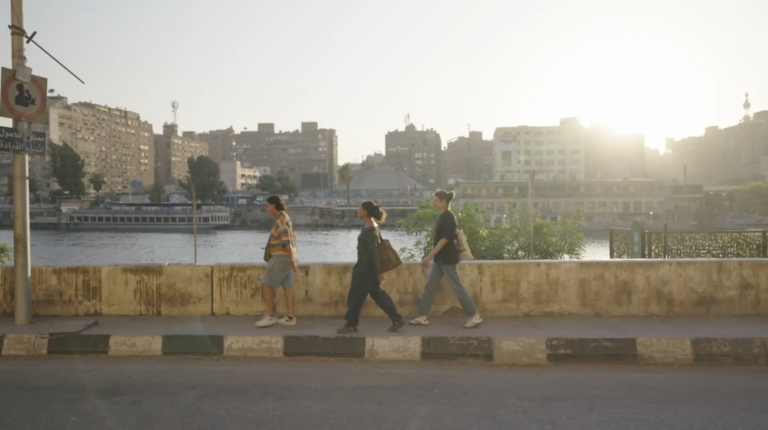
In Cairo, we meet Syrian actress and singer Nanda Mohammad (a collaborator on the project who sang last year in several episodes of Radio live for a few dates). She has been in Egypt since 2012; the last time she saw Damascus, she was on the intelligence agency’s watchlist.
Les participant•es

The indelible uprisings
With Nanda Mohammad, all the questions resurface: to leave or to stay? How can one know ?
Egyptian director Ahmed el Attar also talks to us about the Revolution and the years that followed. He even promised Hala a “guide to keeping hope alive”!
France
So we’re in Cairo, but our stories will take us through several countries: Morocco, Syria, Egypt, and France.
Hala arrived in France in 2015 following the assassination of her father, an opposition figure, by the Syrian regime. Asmaa arrived in 2017. Both have been living in France for years now, and part of their story is also the story of our country. Is our country still capable of making room for those who bring it to life?