This chapter centers on a trip to Kyiv, Ukraine, and the encounters we filmed there.
On stage, Oksana Leuta, a Ukrainian; Hafia Erlen, a German-Ukrainian; and Amir Hassan, a French-Gazan, share their commitments and discuss identity, the concept of home, damaged borders, reconstruction in times of war, and the forms that resistance takes in everyday life.
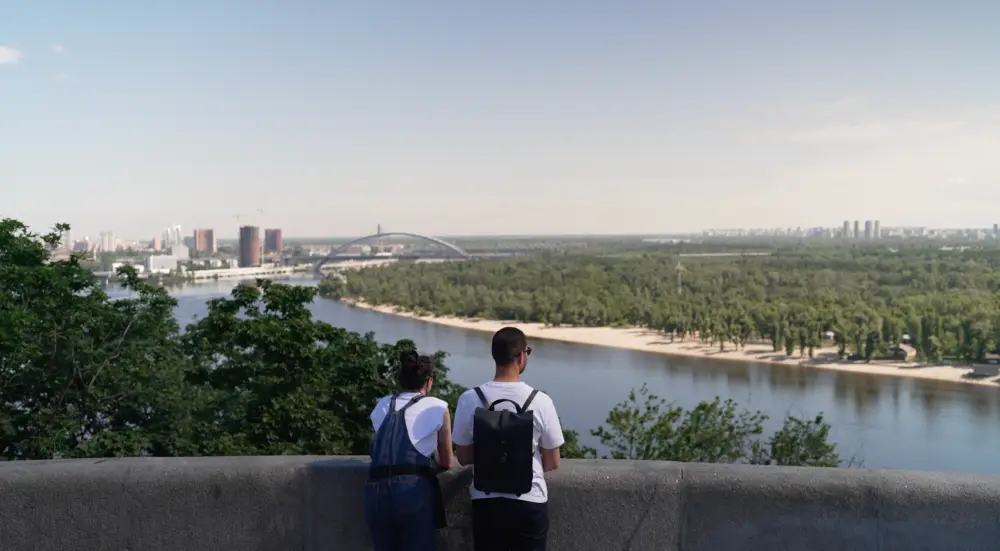
June 2026: Performing in Kyiv
In Vivantes, Oksana Leuta, who has been part of the project for eight years, described her daily life as a fixer for international journalists in Ukraine since the start of the full-scale war in February 2022. For the past two years, we’ve been trying to take the show to Kyiv. We finally managed to go, at the invitation of the DocuDays International Documentary Film Festival, and performed on June 10 and 11, 2026, at the Left Bank Theater.
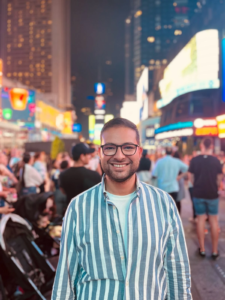
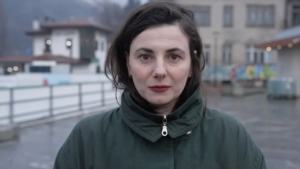
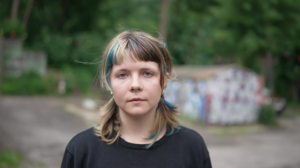
So we set off with Amir Hassan (Gaza) to perform in Kyiv with Oksana, and on that occasion we met Hafia Erlen, a 20-year-old German-Ukrainian who has joined us in the project.
Les participant•es
Arrival in Ukraine
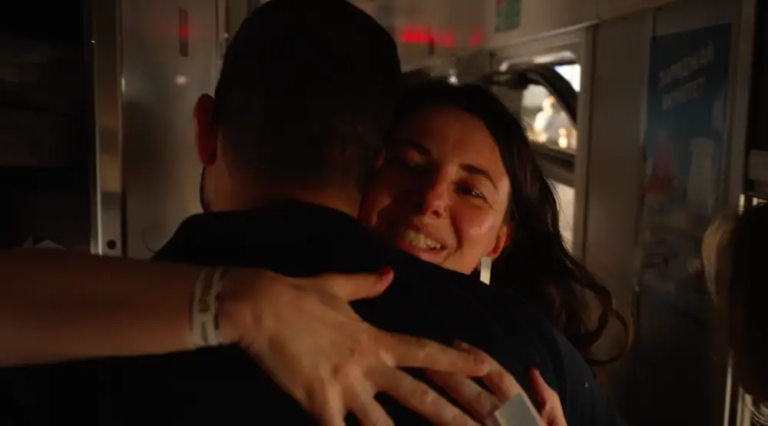
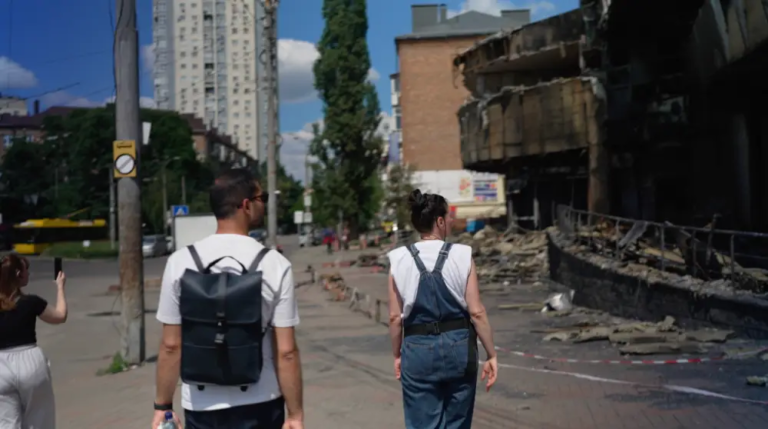
The impression upon arriving in Kyiv, after a 10-hour overnight train ride from Poland, is, of course, that of a city at war: the threat of air raid alerts and massive attacks is constant, and posters in the streets highlight battalions or fundraising efforts for drones.
But what is immediately apparent in the city is the beauty and strength of a country that has truly been reborn—of course, everyone would have preferred not to need a war for that, but Ukraine has rediscovered its identity, its culture, and its language. The theaters are full, bookstores are opening, and publishing houses are putting out books. Physically, in people’s bodies, you can feel the integrity, the uprightness, the heads held high—the strength of those who have faced death and destruction, birth and resistance.
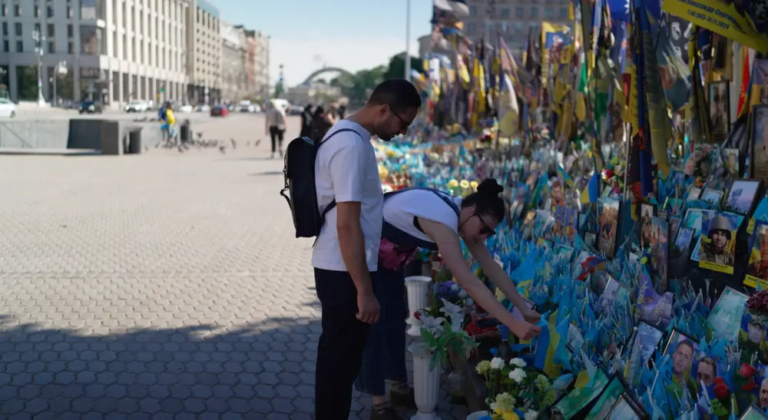
Every day begins at 9 a.m. with a minute of silence throughout the city. Everything stops: cars, passersby. Everyone stands still to remember those who lost their lives on the front lines.
We also feel that what’s happening here directly affects us here in Europe and in France. The democratic values we defend—over there, some people are giving their lives to defend them (and us).
Resilience in everyday life
A notre arrivée, Oksana nous donne le mode d’emploi des prochains jours : les alertes, les abris, les différentes sortes de menaces, drones, missiles, la marche à suivre. Chez elle un soir, une alerte sonne sur nos téléphones.
When we arrive, Oksana gives us instructions for the coming days: the alerts, the shelters, the different kinds of threats—drones, missiles—and what to do. One evening at her place, an alert goes off on our phones. We quickly check: the drones are still far away, so we can wait before heading down to the shelter. The cat she adopted—found in an occupied and bombed village in the eastern part of the country—is circling around us. Her entire life has been turned upside down since February 2022 and the start of the full-scale invasion. She tells us about her daily life on the front lines as a fixer working with international journalists. And about the day the journalist she was accompanying—Frédéric Leclerc-Imhoff—was killed, on May 30, 2022.
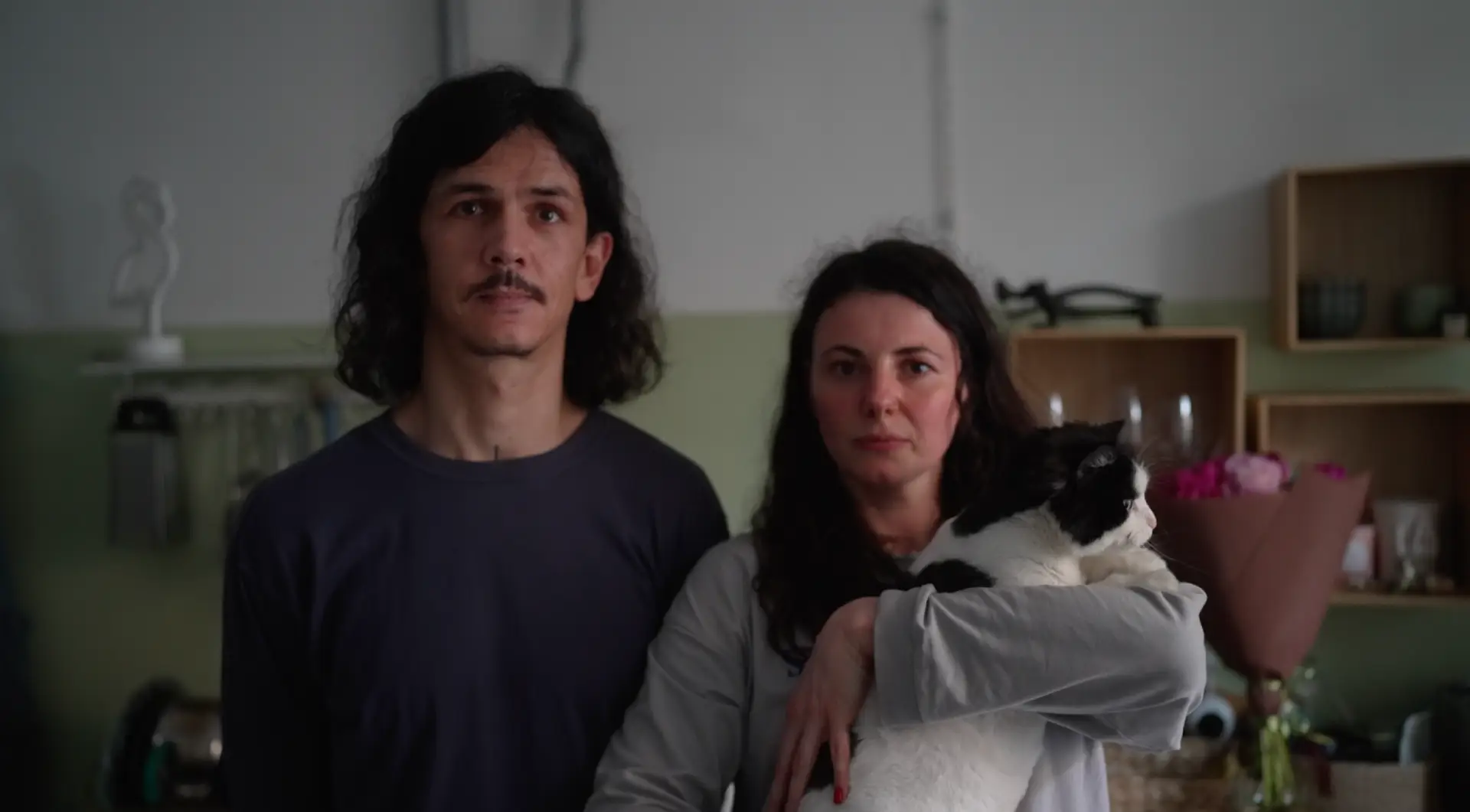
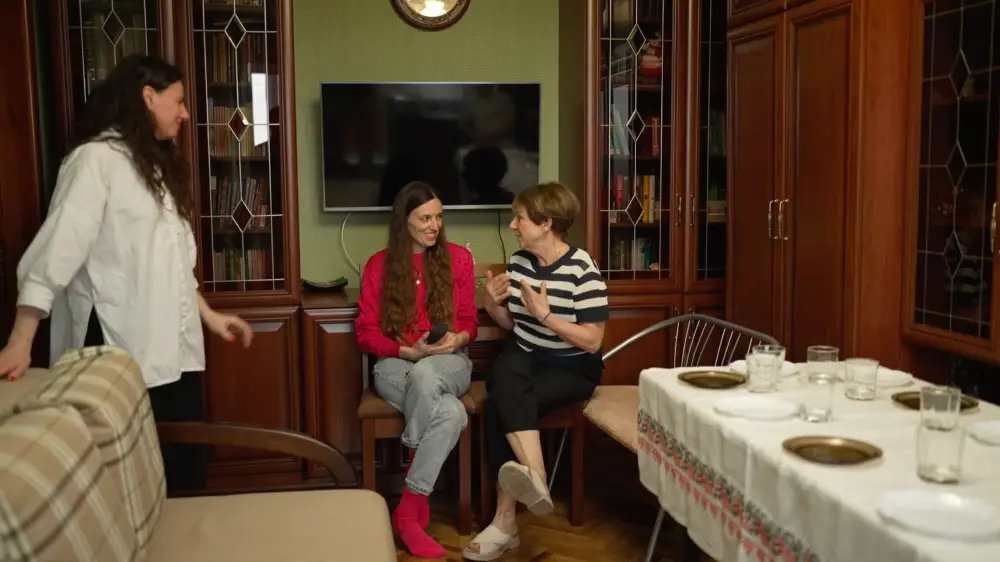
Later, we meet at her parents’ home on the 9th floor of a building in the southern suburbs of Kyiv, in the apartment where she grew up. Her parents tell us about the transition in 1991 to an independent country, breaking away from the USSR. Then they talk about their commitment to Ukraine’s independence since the Maidan Revolution. All those moments of defiance they chose to express their freedom.
In Kyiv, we experience moments of normalcy: dancing at a music festival (even though we know everything stops if there’s an alert), buying a book at a bookstore (founded by a woman who just spent a year and seven months in the army), dining at a good restaurant (run by veterans), going to the theater (run by active-duty soldiers). To tell stories that resist being erased: to save at least the words, if not the lives.
Oksana and Amir’s meeting with Hafia
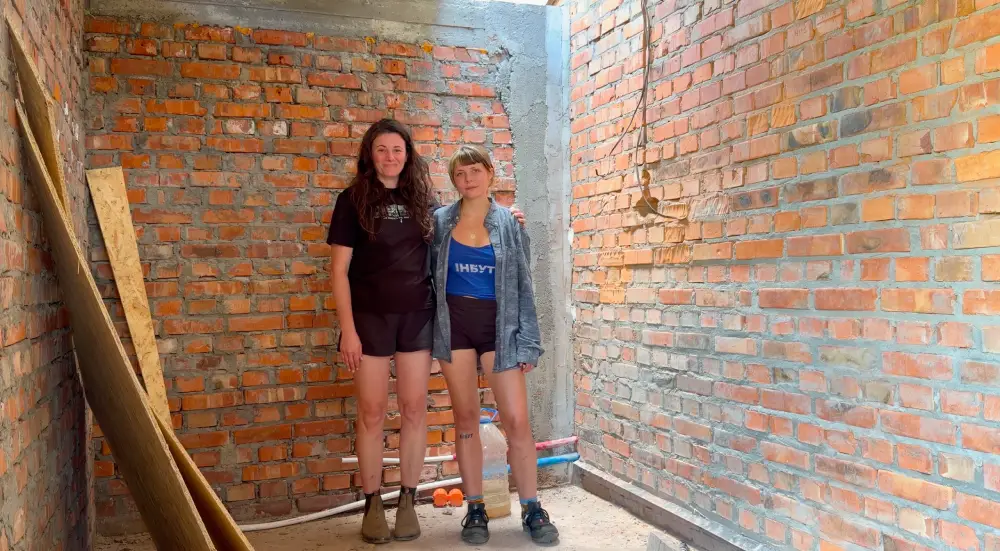
Together, we meet Hafia, a 20-year-old of German and Ukrainian descent. She grew up in Cologne and decided to move to Ukraine when the war began. She has joined Repair Together, a collective of young people repairing homes destroyed by Russian bombings. How can one rebuild when destruction is still ongoing? Amir asks her how she has changed over the past four years. He has been “at a loss for words” since the war began in Gaza, where he has been stranded.
Last August, Oksana went to visit Hafia at the Repair Together construction site in the Chernihiv region. Oksana had already been there at the start of the war to help rebuild a house as a volunteer. This time, she filmed daily life at the construction site for us. We’re also in Cologne at the home of Hafia’s mother, Mariana Sadovska, a Ukrainian singer, who shares traditional Ukrainian songs with us.
Amir grew up in Gaza and lived there until he was 23. He is a poet and journalist in Paris. A few days before October 7, 2023, he left to visit his family and was stranded in Gaza when the war began.
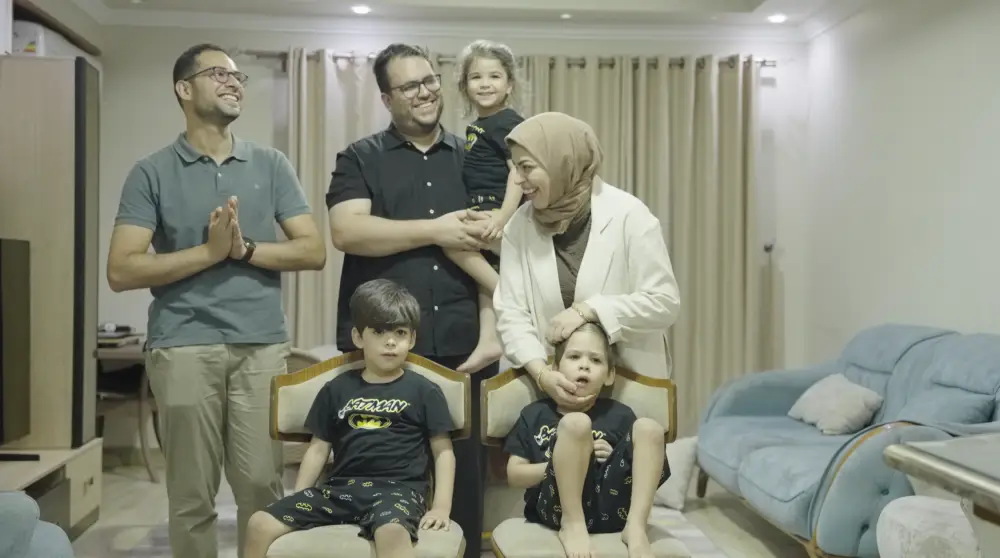
In September, we traveled to Cairo to visit Sami, Amir’s brother, who managed to leave Gaza in 2024 and settle in Cairo with his wife and three children.
And transformation becomes possible
Through who they are, what they do, and what they think, Oksana, Hafia, and Amir remind us that we can live in the world differently. And that in itself is immense. No one wants to live up to these demands: to be indestructible, strong, resilient, and steadfast. But since courage is contagious, telling the story of what remains unbroken in human beings—what doesn’t give way, even when it’s tiny and part of everyday life—lifts us all up. And hope becomes tangible.